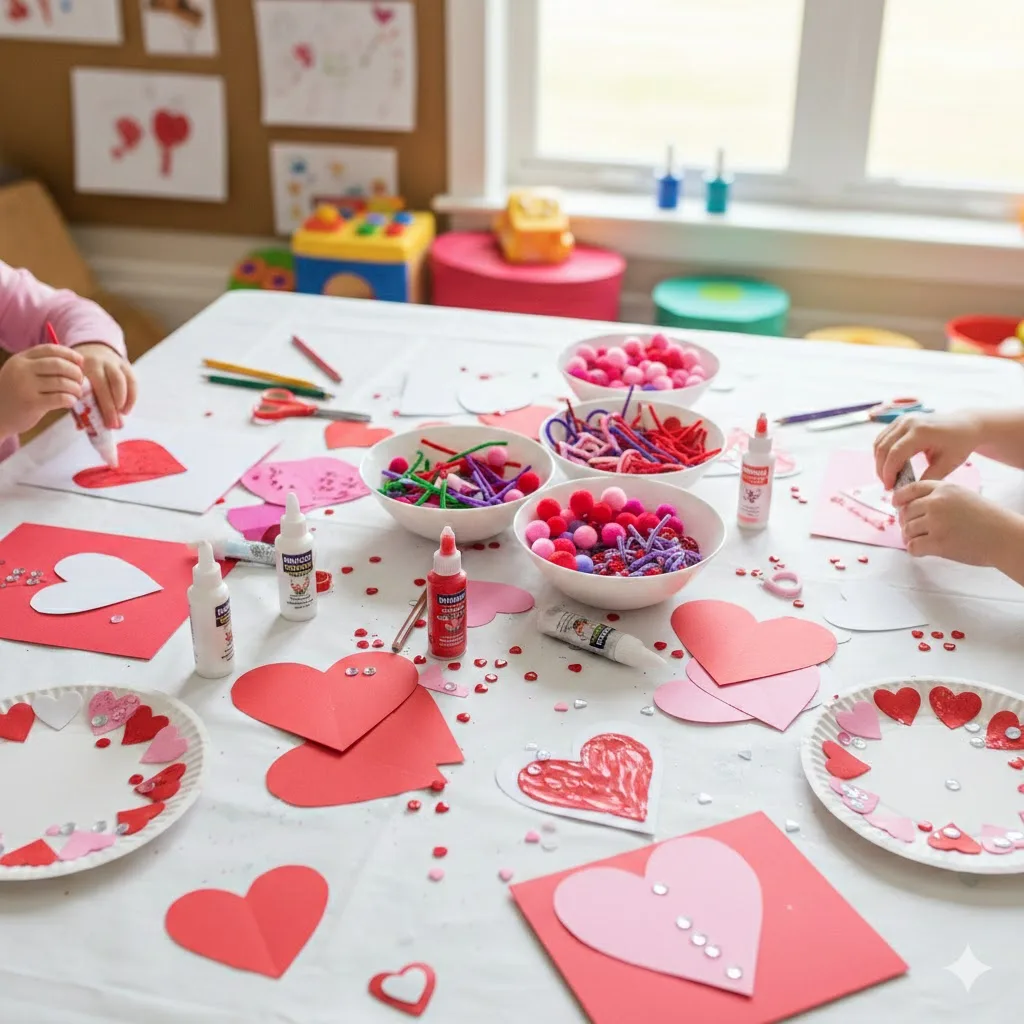
14 Joyful Valentine's Day Activities for Babies, Toddlers, and Preschoolers
Valentine's Day is one of the best holidays to celebrate with young kids, not because of the candy or the cards, but because the whole day is built around love. And for children ages 0 to 6, love is already their primary language. They show it in sticky hugs, in the way they bring you a rock from the yard, in the fierce "I do it myself" independence that really means "I trust you enough to let me try."
This year, instead of stressing over Pinterest-perfect crafts, try leaning into activities that spark genuine joy and quietly support the developmental milestones your child is already working on. Every activity below is screen-free, low-prep, and designed to meet your child right where they are.
Heart-Themed Sensory Play (Ages 0-2)
Sensory play is one of the most powerful ways babies and toddlers learn about their world. It builds neural pathways, supports fine motor development, and lays the groundwork for language as children learn to describe what they feel, see, and touch.
Frozen Heart Excavation
Fill a shallow container with water, drop in some heart-shaped cookie cutters or small toys, and freeze it overnight. Let your little one chip, pour warm water over, and explore the melting ice. This simple setup supports cause-and-effect reasoning and sensory exploration. Bonus: the concentration on their face as they figure out how to free the hearts is pure joy.
Heart Stamp Painting
Cut a toilet paper roll into a heart shape (just pinch one end and you're done). Dip in red or pink paint and let your baby or toddler stamp away. For babies doing this hand-over-hand with a caregiver, you're building early joint attention skills. For toddlers, it's fine motor practice and early patterning, and the pride on their face when they see what they've made is everything.
Valentine's Sensory Bin
Fill a bin with dried rice or pasta dyed pink and red (a splash of vinegar and food coloring in a zip bag does the trick). Add scoops, cups, and heart-shaped items to find. Scooping and pouring builds the hand strength toddlers need for everything from feeding themselves to eventually holding a pencil.
Creative Expression Activities (Ages 2-4)
Between ages 2 and 4, children are exploding with creative energy. They're moving from scribbling to intentional mark-making, starting to use art as communication, and discovering the deep satisfaction of making something and giving it away.
Love Collage
Set out torn pieces of tissue paper, old magazine pages, fabric scraps, and a glue stick. Let your child create freely on a piece of cardstock. There is no wrong way to do this. Tearing paper is actually excellent for bilateral coordination (using both hands together with different movements), and the act of choosing colors and arranging pieces supports early decision-making.
Handprint Hearts
Paint your child's hand and press it onto paper, then do the other hand, angling them together to form a heart shape. This one doubles as a keepsake, and kids light up when they see their own handprint transformed into something new. It supports body awareness and spatial reasoning while creating a moment of genuine connection between you and your child.
Heart-Shaped Playdough
Make a batch of homemade playdough together (flour, salt, water, oil, cream of tartar, and red food coloring). Rolling, squishing, and cutting playdough builds hand strength and fine motor control. For 3- and 4-year-olds, try making playdough "cookies" for a pretend Valentine's bakery. This kind of pretend play is where social-emotional learning really comes alive, as children practice taking turns, sharing, and imagining another person's experience.
Love Bug Craft
Use a paper plate, pipe cleaners for antennae, googly eyes, and heart-shaped stickers or cut-outs for wings. Assembling the pieces in sequence supports early planning and sequencing skills. Let your child name their love bug and tell you about it, because that narrative practice is building language and storytelling skills in real time.
Acts of Kindness and Connection (Ages 3-6)
Preschoolers and kindergarteners are in a remarkable developmental window for empathy and prosocial behavior. They're beginning to understand that other people have feelings too, and they are deeply motivated by the experience of making someone else happy. Valentine's Day is a perfect opportunity to nurture that instinct.
Kindness Heart Hunt
Cut out paper hearts and write or draw a simple act of kindness on each one: "give someone a hug," "draw a picture for a friend," "help set the table." Hide them around the house and let your child find and complete each one. This activity builds reading readiness (for kids who are starting to decode words), gross motor skills (all that searching and moving), and the intrinsic reward of helping others.
Valentine's for Neighbors
Help your child make simple valentines for neighbors, mail carriers, or local community members. Walking the valentines to mailboxes or front doors adds a gross motor and community awareness element. Children who learn early that their actions can bring joy to others develop stronger empathy and social confidence. The proud glow on a 4-year-old's face after delivering a homemade card is one of the best parts of parenting.
Friendship Bracelets (Simplified)
Use large beads and pipe cleaners or chunky yarn for a toddler-friendly version of bracelet making. For preschoolers, try a simple pattern: red, pink, red, pink. Making something specifically for someone else exercises perspective-taking ("What colors does Grandma like?") while the beading itself is excellent fine motor and early math practice through patterning and counting.
Valentine's Day in the Kitchen (Ages 1-6)
Cooking with kids is messy. It's also one of the richest developmental experiences you can offer. It involves math (measuring, counting), science (watching ingredients transform), language (following steps, naming ingredients), and executive function (sequencing, waiting, impulse control when you really want to eat the chocolate chips right now).
Heart-Shaped Fruit Kabobs
Use a small heart-shaped cookie cutter on watermelon, cantaloupe, or strawberry slices. Let your child thread the hearts onto a skewer or pretzel stick. Even the youngest toddlers can help with the cookie cutter (hand-over-hand), and the threading is wonderful for fine motor precision. Plus, there's genuine delight in eating something you made yourself, shaped like a heart.
Pink Smoothie Making
Blend strawberries, banana, yogurt, and a splash of beet juice for extra pink. Let your child add ingredients to the blender, push the button, and pour into cups. Toddlers learn about sequencing and cause-and-effect. Preschoolers can practice measuring. Everyone gets the joy of a delicious pink drink they made "all by myself."
Decorating Heart Cookies
Use a simple sugar cookie recipe (or store-bought dough, no judgment). Cut into hearts. Set out bowls of sprinkles, yogurt-based icing, and small fruits for decorating. For toddlers, the scooping and sprinkling is the activity. For preschoolers and older kids, this becomes an exercise in planning, creativity, and the generous impulse of "I want to make one for Daddy."
Reading and Connection Time (All Ages)
Never underestimate the developmental power of reading together, especially on a day built around love. Cuddling up with a book supports language development, emotional literacy, and secure attachment, all while being one of the most joyful parts of the day.
A Few Favorites for Valentine's Day:
- "Guess How Much I Love You" by Sam McBratney (ages 1-4): a beautiful book about expressing big feelings
- "Love Monster" by Rachel Bright (ages 2-5): a story about finding belonging that builds social-emotional vocabulary
- "The Day It Rained Hearts" by Felicia Bond (ages 3-6): a creative story about generosity and making something special for others
- "I Love You Already!" by Jory John (ages 3-6): a funny take on friendship that kids find hilarious, and laughter is its own developmental milestone
After reading, try asking your child open-ended questions: "Who would you make a valentine for? What would you put on it?" These conversations build narrative skills, creative thinking, and emotional vocabulary.
Making It Your Own
The most important thing about Valentine's Day with young kids isn't the activity you choose. It's the presence you bring to it. A toddler doesn't need an elaborate setup. They need you, on the floor, covered in pink paint, laughing when the playdough gets stuck to the table.
Joy is a developmental catalyst. When children experience delight in learning, their brains are more receptive, more flexible, more ready to grow. So pick one or two activities from this list, keep your expectations low and your patience high, and let the love do the rest.
Happy Valentine's Day from all of us at Puffling.
Puffling delivers one curated, research-backed developmental activity to your phone every day, personalized to your child's age and stage. No overwhelm, no decision fatigue, just the good stuff. Try it free at puffling.ai
Ready to make playtime magical?
Get personalized play ideas for your child in seconds.
Download Free