How to Cook Dinner With a Toddler Underfoot (Without Losing Your Mind)
It's 5pm. You need to get dinner on the table. And your toddler is wrapped around your leg like a small, demanding koala.
You have two options: screen time or chaos. Right?
Not quite. There's a third path that doesn't involve parking your kid in front of a tablet or scraping spaghetti sauce off the ceiling. With a little creativity, you can include your toddler in dinner prep in ways that keep them engaged, keep your kitchen mostly intact, and actually support their growing brain.
Why Cooking With Toddlers Is Worth the Mess
Before we get into the practical stuff, here's some motivation: cooking with young children isn't just a way to survive the witching hour. It's genuinely good for their development.
Language explosion. The kitchen is full of opportunities for new vocabulary. Sizzling, chopping, stirring, crunchy, smooth, pour, sprinkle. Research shows that children learn language best in context, when words are tied to real objects and actions they can see and touch.
Executive function practice. Following a simple recipe, even just "first we wash, then we tear," builds the sequencing and working memory skills that predict later academic success. A 2020 study in the British Food Journal found that children who cook at home show stronger planning and problem-solving abilities.
Sensory integration. Touching different textures, smelling herbs, watching water boil: these experiences help toddlers process sensory information and build neural pathways. The brain learns by doing, and the kitchen offers a rich multisensory environment.
Math foundations. Counting cherry tomatoes, comparing bigger and smaller spoons, filling and dumping measuring cups. These are the building blocks of early numeracy, and they're happening naturally during meal prep.
Practical Ways to Include Toddlers Without Destroying the Kitchen
The key is matching tasks to your child's abilities and your own tolerance for mess on any given day. Here are ideas organized by effort level.
Low Mess, Low Supervision
These work when you really need to focus on the stove and can only half-watch what they're doing.
- Set up a washing station. Fill a small bin with water and give them vegetables to "wash." Potatoes, carrots, and apples are sturdy enough to survive enthusiastic scrubbing. Put a towel underneath and let them go.
- Create a "cooking" drawer. Designate a low drawer or cabinet with safe kitchen items: wooden spoons, plastic containers, a small pot, a whisk. Let them "cook" alongside you on the floor.
- Give them a sorting task. A bowl of cherry tomatoes to move one by one into another bowl. Snap peas to put in a colander. This keeps hands busy with minimal disaster potential.
Medium Mess, Some Supervision
For days when you have a bit more bandwidth.
- Tearing and breaking. Lettuce leaves, bread for breadcrumbs, green beans snapped in half. Toddlers love the sensory feedback of tearing, and it's a legitimate help.
- Stirring cold ingredients. A bowl of salad, dry ingredients before liquids are added, or a marinade that's already mixed. Give them a big spoon and let them stir to their heart's content.
- Sprinkling. Cheese on top of a casserole, herbs on a salad, seasoning on vegetables. Put a small amount in a bowl they control so you're not fishing tiny hands out of the main container.
Higher Mess, Active Involvement
For when you're feeling patient and have time for cleanup.
- Dumping pre-measured ingredients. Measure everything into small bowls ahead of time and let them pour each one into the mixing bowl. They feel like a real helper, and you keep control of quantities.
- Kneading and mixing dough. Pizza dough, bread, biscuits. Give them their own small ball to work with at their own pace.
- Using safe kitchen tools. A crinkle cutter for soft foods like bananas or strawberries, a butter knife for spreading, a small rolling pin. Close supervision required, but these build fine motor skills and confidence.
Setting Up for Success
A few strategic choices make cooking with toddlers much more manageable.
- Use a learning tower or sturdy stool. Getting them up to counter height means they can see what's happening and participate more easily. It also means they're contained in one spot rather than darting around the kitchen.
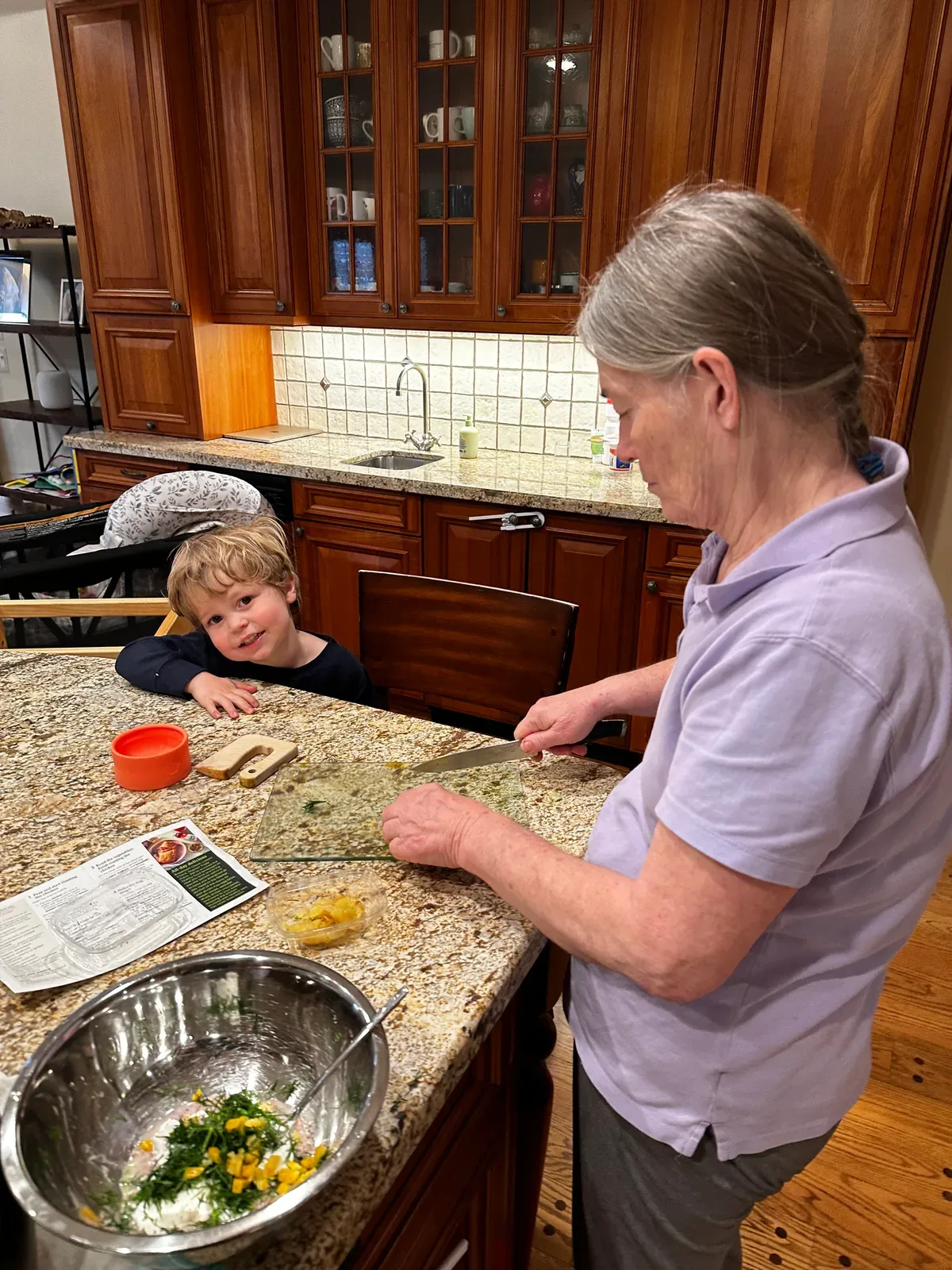
- Prep before you invite them in. Do your chopping and any tasks requiring sharp knives or hot surfaces before your toddler joins. Then bring them in for the safer, more tactile steps.
- Embrace "good enough." The lettuce will be torn into weird shapes. The cheese will not be evenly distributed. This is fine. The goal is engagement, not perfection.
- Have a backup activity ready. A special toy that only comes out during cooking, a sensory bin on the kitchen floor, or a simple activity at the table nearby. Some days they'll lose interest in helping, and that's okay.
What About the Mess?
Yes, there will be some mess. But contained mess is manageable mess. A few strategies that help:
- Keep their workspace small and defined. A single cutting board, a single bowl, a small section of counter.
- Put a splat mat or old towel under their station.
- Accept that some flour will end up on the floor. A handheld vacuum or a quick sweep after dinner is easier than fighting the mess in the moment.
- Lower your standards for this season of life. A little chaos in exchange for a child who's learning, engaged, and not melting down at your feet is a worthwhile trade.
The Bigger Picture
Cooking with your toddler isn't really about the food. It's about connection during a hectic part of the day. It's about showing them that they're capable of contributing to the family. And it's about all those small moments of learning that add up over time: new words, new textures, new skills.
The kitchen might get a little messier. But your toddler's brain is getting exactly what it needs.
Want one simple activity like this delivered to your phone each day? Puffling helps you turn everyday moments into developmental wins, no planning required. Download the app and try it free →
Ready to make playtime magical?
Get personalized play ideas for your child in seconds.
Download Free