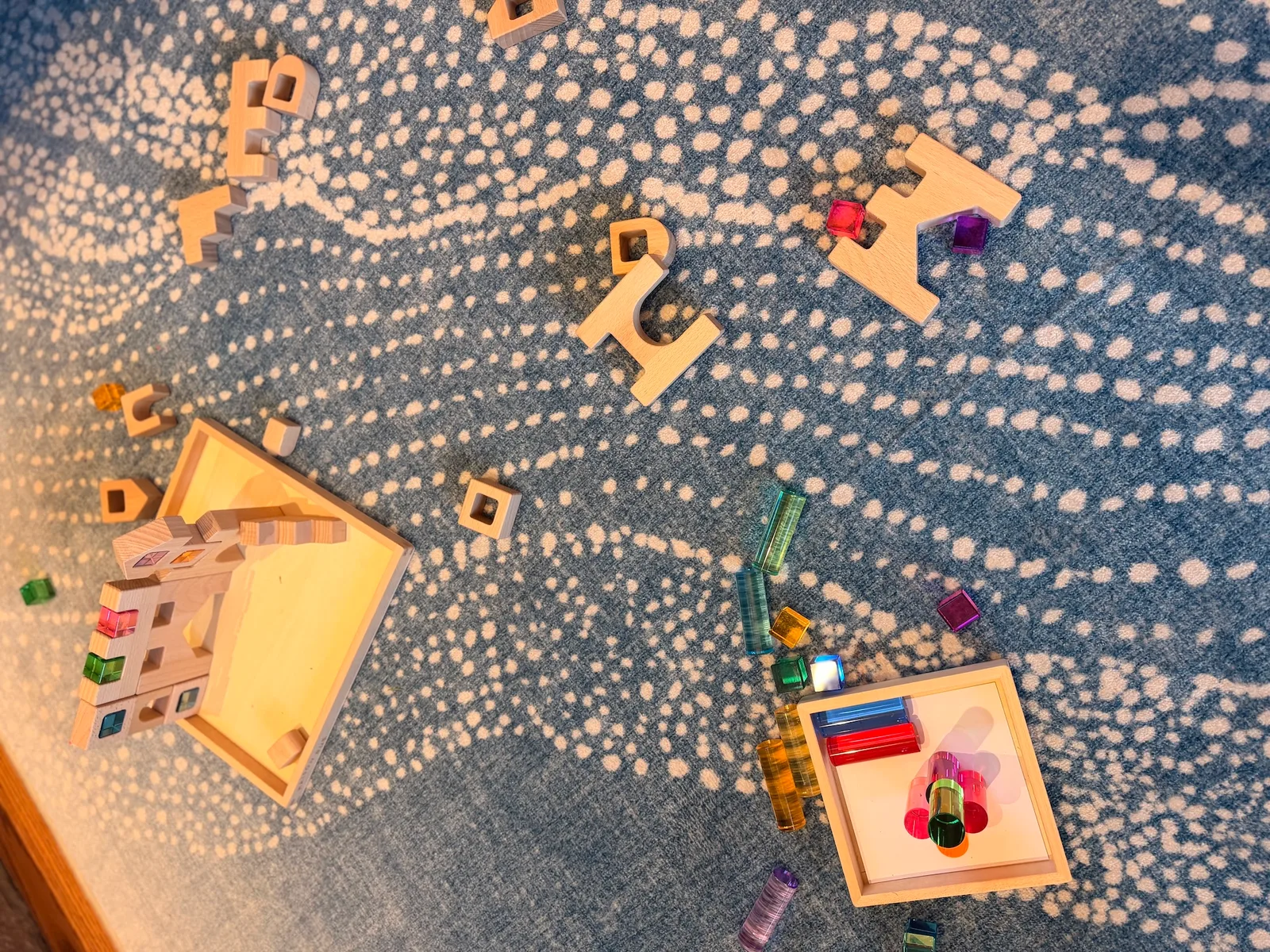
Matching and Sorting Activities for Kids 0-6: A Home Guide
At a Glance: Key Takeaways
- Matching and sorting are foundational math and thinking skills — not just cute play activities. They underpin pattern recognition, logical reasoning, and even early literacy.
- These skills begin developing in infancy and grow in complexity through age six and beyond, following a natural progression from simple pairing to multi-attribute classification.
- You don't need special toys. Socks, leaves, snack crackers, and the general chaos of your kitchen are all excellent sorting materials.
- Talking matters as much as doing. Narrating what your child is sorting and why ("You put all the round ones together!") builds the mathematical vocabulary that fuels later learning.
- Every child's timeline is different. The stages below are guideposts, not deadlines. Follow your child's curiosity.
Why Should You Care About Sorting? (It's Not Just Tidying Up)
If you've ever watched a toddler methodically separate their blueberries from their strawberries at snack time — and then refuse to eat any of them — congratulations. You've witnessed early mathematical reasoning in action.
Matching and sorting might sound like the kind of thing a preschool teacher puts on a lesson plan, not the stuff of riveting parenting conversation. But here's the thing: these seemingly simple acts of grouping objects by color, shape, or size are laying down the neural architecture your child will later use for pattern recognition, number sense, algebraic thinking, and problem-solving. The National Association for the Education of Young Children (NAEYC) and the National Council of Teachers of Mathematics (NCTM) have jointly affirmed that sorting and classifying are foundational math experiences that actually precede counting and arithmetic in a child's developmental journey.
Think about it this way: before your child can meaningfully count a group of objects, they need to understand what makes a "group" in the first place. Are we counting all the blocks? Just the red ones? Only the big red ones? That ability to identify, compare, and categorize attributes is what sorting builds — and it's more sophisticated than it looks from the outside.
As the NAEYC writes in Exploring Math and Science in Preschool, early experiences in sorting help young learners observe how things are alike and different — skills that are essential to both early literacy and math.
The same cognitive muscles a child uses to sort buttons by shape are the ones they'll later use to sort letters by sound, ideas by category, and data by variable.
The Science: What's Actually Happening in Your Child's Brain
Jean Piaget, the Swiss developmental psychologist whose work still shapes how we understand children's minds, described cognitive development as a process of building "schemas" — mental frameworks for understanding the world. When a baby notices that some objects roll and others don't, or that certain faces are familiar and others are new, they're already sorting. They're constructing categories. They're doing math — they just don't know it yet.
Piaget's framework identifies two stages relevant to our age range. In the sensorimotor stage (birth to about age 2), children learn through their senses and physical actions: mouthing, grabbing, dropping, banging. They're gathering raw data about the properties of objects. In the preoperational stage (roughly ages 2 to 7), children begin to think symbolically, use language to represent ideas, and — crucially — start grouping, matching, and sorting objects with increasing sophistication.
Modern developmental research has built on and refined Piaget's model, and one thing is clear: children tend to reach cognitive milestones earlier than Piaget initially proposed, especially when they're given rich, hands-on opportunities to explore. Michigan State University Extension notes that much of a child's math learning comes simply from adults talking to them about what they're seeing and doing — pointing out shapes, using comparison words like "more," "fewer," and "same," and narrating the sorting that's already happening naturally in everyday life.
The research also connects sorting to executive function — that set of mental skills that includes working memory, flexible thinking, and self-control. When a child sorts toys by color and then re-sorts them by size, they're practicing cognitive flexibility, which studies have linked to later academic success in both math and reading. It's the mental equivalent of cross-training.
How Matching and Sorting Grow: A Stage-by-Stage Look
Every child develops at their own pace, and the ages below are approximations, not benchmarks to measure against. Think of them as a loose roadmap for what you might notice — and what you can gently encourage.
Birth to 12 Months: The Sensory Sorters
Your baby isn't going to organize their block collection anytime soon. But even in the first year, the seeds of sorting are being planted. Infants distinguish between familiar and unfamiliar faces. They learn that certain sounds (crying) get certain responses (comfort), and they begin to mentally categorize their experiences. By around five months, babies are developing basic color vision and depth perception, and they're starting to notice differences between objects — the fuzzy bear versus the smooth rattle.
What you can do: You don't need to "teach" anything here. Just narrate. "This one is soft. This one is bumpy." Offer objects with different textures, weights, and colors during play. The richer the sensory input, the more raw material your baby has for building those early mental categories.
I remember sitting on the floor with my daughter at around nine months, surrounded by a basket of fabric scraps I'd collected — silk, corduroy, terry cloth, fleece. She'd pick one up, mouth it, drop it, and reach for another. It wasn't sorting in any formal sense, but she was absolutely comparing. You could see it in the way she'd pause, feeling the difference between textures before moving on.
12 to 24 Months: The Matchers
This is when matching emerges in a form you can actually see. Toddlers begin pairing identical objects — two same-colored blocks, two matching socks, two toy cars that look alike. They might not be able to tell you why they go together, but the recognition of sameness is there. By around 18 months, many children can match real objects to their pictures.
What you can do: Offer simple matching opportunities during daily routines. Sock matching during laundry is a classic for a reason — it's real, it's tangible, and toddlers love feeling helpful. You can also place two identical toys at different spots in the room and watch your toddler's face light up when they bring them together.
Try this: Pull out a small collection of shoes and ask your toddler to find the ones that "go together." Don't worry about left and right — just the matching. The pride they feel when they pair Dad's enormous sneakers is worth the slightly chaotic shoe pile you'll be left with.
2 to 3 Years: The Single-Attribute Sorters
Here's where things start to get genuinely fun. Children in this age range begin sorting objects by a single attribute — usually color first, then shape, then size. They can look at a pile of mixed objects and create groups: "all the blue ones here, all the red ones there." It's a huge cognitive leap from matching two identical things to recognizing that many different objects share one common property.
The NAEYC and NCTM joint position statement emphasizes that high-quality early mathematics education is about children experiencing math as they explore ideas of "more and less," make comparisons, create patterns, sort objects, and explore shapes — not about drilling arithmetic.
What you can do: Set up a "sorting station" with everyday items. A muffin tin and a bowl of mixed buttons (supervised, of course — buttons are a choking hazard for young children), pom-poms, or pasta shapes work beautifully. Let your child decide how to sort. The key phrase, straight from NAEYC's guidance, is: "How do you want to sort them?" There's no single correct way, and letting your child choose their own sorting rule is where the real thinking happens.
Try this — The Snack Sort: At snack time, offer a mix of two or three different items — goldfish crackers, raisins, and cereal pieces, for example. Before eating, invite your child to sort them into small cups. "Can you put all the fishies together?" Then watch what happens. Some kids will sort by type. Some will sort by color. Some will immediately eat the raisins and sort the rest. All of these are valid outcomes.
3 to 4 Years: The Rule-Followers (and Rule-Breakers)
Preschoolers become more deliberate and verbal about their sorting. They can follow a sorting rule you give them ("Put all the big ones in this pile") and they're starting to articulate their own rules ("I put these here because they're animals and these are trucks"). They're also getting better at sorting by less obvious attributes — not just color and shape, but function, category, or even emotion ("These are the happy ones and these are the grumpy ones").
Research from the University of Nevada, Reno confirms that children between ages 3 and 4 particularly enjoy sorting and classifying, usually by one characteristic at a time. If they don't yet know the names for colors or shapes, it helps to ask them to find something that's "the same as" a specific item rather than labeling it for them.
What you can do: Involve your child in real household sorting tasks. Putting away groceries is surprisingly rich — cans go here, boxes go there, cold things go in the fridge. Folding laundry and sorting by family member ("Whose shirt is this? Where does it go?") builds both categorization and a sense of contribution.
Try this — The Nature Sort: On your next walk, collect a bag of natural objects — leaves, sticks, pebbles, acorns, seed pods. At home, spread them out on a tray and let your child sort them however they want. Then ask: "Can you sort them a different way?" This re-sorting is where cognitive flexibility gets its workout. One parent I spoke with told me her son sorted his nature collection into "things that are alive" and "things that used to be alive" — a classification system that was both scientifically impressive and slightly haunting.
4 to 5 Years: The Multi-Attribute Thinkers
This is a big developmental shift. Children begin to sort by more than one attribute at a time — not just "red things," but "big red things" versus "small red things." They can also begin to understand that a single object belongs to multiple categories simultaneously (a red, wooden, square block is red and wooden and square). This kind of flexible categorization is a direct precursor to the thinking needed for data analysis and scientific reasoning.
What you can do: Play "Guess My Rule." Sort a group of objects according to a secret rule and ask your child to figure out what it is. Then switch — let them make the rule and you guess. This is a legitimately fun game for adults too, especially when kids come up with rules you'd never expect. ("They all have a letter 'o' in their name" was one I encountered that stopped me cold.)
Try this — The Button Challenge: Gather a big jar of mixed buttons (craft stores are great for this). Ask your child to sort them by color. Then dump them back together and sort by size. Then by number of holes. Each round requires them to ignore the attribute they just used and focus on a new one — a powerful exercise in flexible thinking.
5 to 6 Years: The Pattern-Finders and Data Collectors
By now, sorting has evolved into something that genuinely resembles mathematical reasoning. Children can sort, re-sort, create patterns from sorted groups, and even begin to record and represent their sorting work (simple bar graphs, tally marks). They understand that categories can have subcategories and that classification is a tool for organizing information — not just objects, but ideas.
Researchers have found that children's tendencies to collect and sort items by attributes are a key element in their ability to represent, analyze, and interpret data — skills that will become central in elementary school math and science.
What you can do: Introduce simple data collection projects. "Let's count how many of each color car we see on our drive." Then help them make a chart when you get home. You're not teaching them statistics — you're giving them the experience of turning sorted observations into organized information, which is statistics, in its earliest form.
Try this — The Toy Census: Choose a category of toy (stuffed animals, LEGO minifigures, toy cars) and do a "census." Sort them by sub-attributes, count each group, and make a simple bar graph with sticky notes or drawn blocks. "You have 7 animals, 4 vehicles, and 3 people — which group is biggest? How many more animals than people?" This single activity touches sorting, counting, comparison, and data representation all at once.
10 Quick Activities You Can Start Today
You don't need to buy a single thing. Here are ideas organized by effort level:
Almost Zero Effort (Daily Routines)
- Sock Matching Station — Dump the clean socks on the couch. Let your child find the pairs. Accept imperfect matches gracefully.
- Grocery Sort — As you unpack, let your child decide where things go. "Does this go in the fridge or the pantry? Why?"
- Utensil Helper — After the dishwasher runs, let your child sort forks, spoons, and knives (butter knives only, obviously) into the drawer divider.
Low Effort (5-Minute Setups)
- Color Walk — On a walk, pick a color. Count everything you see in that color. Next walk, pick a different one.
- Muffin Tin Sort — A muffin tin plus any collection of small objects (pasta, beads, cotton balls, buttons). That's it. That's the activity.
- Book Sort — Pull a stack of books off the shelf. "How should we organize these?" By size? By color? By "ones with animals on the cover"?
Moderate Effort (10–15 Minute Setups)
- Nature Collection Tray — Gather natural items on a walk and sort at home on a baking sheet. Re-sort multiple ways.
- Toy Car Wash & Sort — Wash toy vehicles in a bin of soapy water, then sort by color, size, or type as they "dry" on a towel.
- Shape Hunt & Graph — Cut out a circle, square, and triangle from paper. Walk through the house finding objects that match each shape. Tally them up.
- The Restaurant Game — Set up a pretend restaurant. Your child is the chef. They must sort play food by type (fruit, vegetables, bread) before "cooking." Order something specific and watch them categorize to find the ingredients.
What Matters More Than Any Activity
If there's one takeaway from the research, it's this: the conversation around sorting matters as much as the sorting itself.
When you say things like "You put all the round ones together — how did you decide that?" or "I notice you made two groups — tell me about them," you're doing something powerful. You're giving your child the language of mathematical thinking. Words like same, different, group, set, more, fewer, bigger, smaller — these are math words, and hearing them used in context, connected to real objects and real decisions, is how children internalize them.
Michigan State University Extension puts it simply: much of a child's learning comes from just talking to them. When we point out things like numbers, shapes, sizes, and amounts, we are teaching them math vocabulary — the verbal scaffolding they need to think mathematically.
You also don't need to correct your child's sorting. If they put a purple crayon in the "blue" pile, resist the urge to move it. Ask instead: "Tell me about this one. Where did you decide it goes?" You might learn that in their schema, purple is a kind of blue — and honestly, that's a pretty reasonable classification. The goal isn't perfect sorting; it's confident thinking.
The Bottom Line
Matching and sorting aren't just preschool busywork. They're how young children learn to make sense of a complex world — to notice patterns, organize information, and build the kind of flexible, logical thinking that will serve them for the rest of their lives. And the best part? It all happens through play, through conversation, and through the wonderfully messy stuff of everyday family life.
You don't need a curriculum. You need a sock drawer, a muffin tin, and a willingness to ask: "How do you want to sort them this time?"
Sources and Further Reading
- National Association for the Education of Young Children (NAEYC) & National Council of Teachers of Mathematics (NCTM). (2002, updated 2010). Early Childhood Mathematics: Promoting Good Beginnings. Joint Position Statement.
- NAEYC. (2015). Exploring Math and Science in Preschool.
- Chen, J. Q., Hynes-Berry, M., Abel, B., Sims, C., & Ginet, L. (2017). Nurturing mathematical thinkers from birth: the why, what, and how. Zero to Three, 37(5), 23–26.
- Piaget, J. (1936/1952). The Origins of Intelligence in Children. International Universities Press.
- Ginsburg, H., Lee, J., & Boyd, J. (2008). Mathematics education for young children: What it is and how to promote it. Social Policy Report, 22(1).
- Michigan State University Extension. "Sorting and Classifying with Infants and Toddlers." MSU Extension.
- Duncan, G. J., et al. (2007). School readiness and later achievement. Developmental Psychology, 43(6), 1428–1446.
- University of Nevada, Reno Extension. (2013). "Math in the Preschool Classroom: Classification, Matching, Seriation and Patterning." FS-16-12.
- Clements, D. H., Sarama, J., & DiBiase, A. M. (2004). Engaging Young Children in Mathematics. Lawrence Erlbaum Associates.
- Ramscar, M., Thorpe, K., & Denny, K. (2007). Surprise in the learning of color words. Proceedings of the Annual Meeting of the Cognitive Science Society, 29.
Ready to make playtime magical?
Get personalized play ideas for your child in seconds.
Download Free