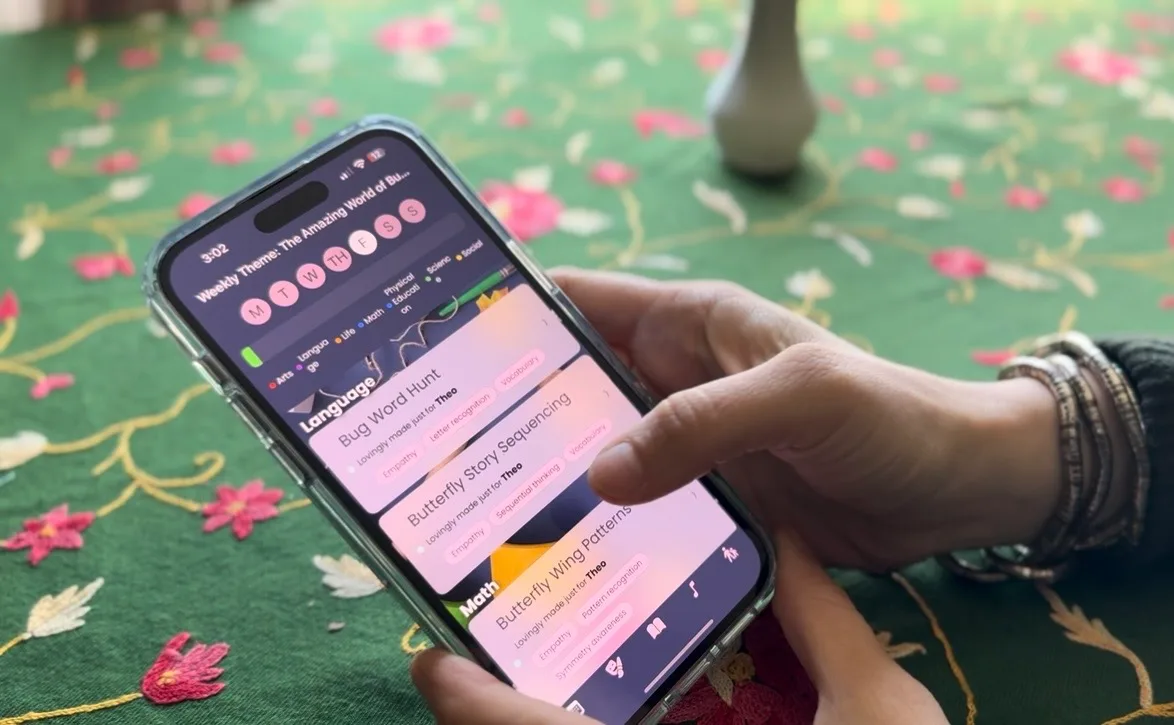
The Problem With Parenting Apps (And Why I Built Something Different)
The Big Idea
There are thousands of parenting apps promising to track your baby's milestones, suggest activities, and reduce the mental load of raising little humans. So why do most parents download them, open them twice, and never go back? Because they make the same mistake: they give you more to do instead of less. After a decade in product at companies like Meta and Lyft, and two years of parenting two boys under five, I built Puffling to solve this problem. One curated, research-backed developmental activity per day. That's it. Here's why.
I Was the Target User, and I Was Drowning
Let me set the scene. It's a Tuesday morning. My oldest is three, my youngest is ten months, and I haven't slept more than four consecutive hours in a week. My phone is full of parenting apps: one for milestone tracking, one for sleep, one with a library of 500+ activities organized by age and category. All highly rated. All beautifully designed. And all completely useless to me in that moment.
I didn't need 500 activity ideas. I needed one. I needed someone to tell me: here's what to do with your kids today, it will take ten minutes, and it's actually good for their brain. That's it. That's all I had capacity for.
Instead, every app I opened asked me to browse, filter, save, and plan. It felt like homework. And parenting already has enough homework.
The Paradox of Choice in Parenting Apps
Psychologist Barry Schwartz coined the term "the paradox of choice" to describe how having too many options leads to anxiety, paralysis, and dissatisfaction. This is exactly what most child development apps do to parents.
Think about the typical parenting app experience. You open the app and see a menu: sensory play, fine motor, gross motor, language development, social-emotional learning, arts and crafts, outdoor activities, music and movement. Within each category, there are dozens (sometimes hundreds) of suggestions. Each one requires you to read the instructions, check whether you have the materials, decide if it's right for your child's age and stage, and then actually do the thing.
By the time you've scrolled through the options, your toddler has emptied the kitchen drawer and your baby is chewing on a shoe. The moment has passed.
This isn't a failure of willpower or effort. It's a design problem. These apps are built for browsing, not for doing. They're optimized for engagement metrics (time in app, pages viewed, activities saved) rather than for the outcome parents actually want: meaningful moments with their kids that support healthy development.
What Parents Actually Need (According to the Research)
Here's what the science says: young children don't need elaborate, Pinterest-worthy activities to thrive. The American Academy of Pediatrics, Harvard's Center on the Developing Child, and decades of developmental research all point to the same conclusion. What matters most for children ages zero to six is responsive, engaged interaction with a caregiver. Serve and return. Narrating what you see. Following their lead. Asking open-ended questions during play.
In other words, the activities that actually build your child's brain are usually simple, short, and don't require a trip to the craft store. Sorting socks together builds early math skills. Narrating your walk to the mailbox builds language. Letting your toddler pour water between cups at the sink builds fine motor skills and executive function.
But most parenting apps don't reflect this reality. They create the impression that you need to be doing more, buying more supplies, and spending more time setting up elaborate sensory bins to be a "good" parent. That gap between what the research says and what the apps suggest is where parenting guilt lives.
Why I Left My Job at Meta to Fix This
I spent over a decade in product marketing at companies like Meta, Lyft, and Coursera. My job was to understand what people actually need and then figure out how to deliver it in a way that fits into their real lives. When I became a parent, I realized no one was doing this for the biggest, most overwhelming job I'd ever had.
The parenting app market is huge and growing. But most products are built on the same flawed assumption: that parents want a library of choices. What they actually want is confidence. They want to know they're doing enough for their child's development without having to become an expert in child psychology.
My co-founder (and husband) Andrew and I started Puffling because we lived this frustration every single day. We wanted to build the app we wished existed: one that respects parents' time, trusts the science, and eliminates the decision fatigue that makes every other parenting app feel like another chore.
How Puffling Is Different
Puffling gives you one activity per day. Just one. It's personalized to your child's age and developmental stage, grounded in peer-reviewed research, and designed to take ten minutes or less with things you already have at home.
There's no browsing. No filtering. No 47 tabs of "saved" activities you'll never get to. You open the app, see today's activity, and do it. Or don't. Either way, you know it's there when you need it.
We think of it as Lovevery without the toys. The same research-backed, stage-appropriate developmental support, delivered through a simple daily activity instead of a subscription box. Because what parents need isn't more stuff. It's more clarity.
What makes each daily activity different
- Curated, not crowdsourced. Every activity is selected and reviewed against current developmental science. We don't scrape the internet for content. We build each recommendation intentionally.
- One per day, by design. The constraint is the feature. Limiting to one activity eliminates the browsing, comparing, and guilt spiral that makes other apps counterproductive.
- No special supplies needed. Every activity uses items you already have: kitchen utensils, socks, paper, water. If it requires a trip to the store, it doesn't make the cut.
- Context you can trust. Each activity comes with a brief explanation of the developmental skill it supports, so you understand the "why" behind the play. Knowledge that transfers to every other interaction you have with your child that day.
The Real Competition Isn't Other Apps
When people ask who Puffling competes with, they expect me to name other parenting apps. But the real competition is doing nothing. The real competition is the parent who's too exhausted to open yet another app, too overwhelmed to choose from a menu of 200 sensory bin ideas, and too burned out to believe that any product can actually make their day easier.
That parent is who I'm building for. Because that parent was me. And I know that the right activity at the right time, delivered in the right way, can turn a hard Tuesday morning into a moment you actually enjoy with your kids. Not because you planned it perfectly, but because someone took the planning off your plate.
You're Already Doing Enough
If there's one thing I want parents to take away from this post, it's this: the things you're already doing with your children—talking to them at the grocery store, reading the same book for the fourteenth time, letting them "help" you cook dinner—are building their brains. You don't need to do more. You might just need a little support knowing that what you're doing matters.
That's what Puffling is. Not another item on your to-do list. A daily reminder that simple, connected moments are the foundation of healthy child development, and a little nudge to help you create one more of them each day.
Puffling is launching soon. Join the waitlist at puffling.ai to get early access. One activity. Once a day. Backed by science. Built for real life.
Ready to make playtime magical?
Get personalized play ideas for your child in seconds.
Download Free